Tuesday, August 27, 2013

Russia's Deputy PM: "The West behaves in the Islamic world like a monkey with a grenade"

Russia Warns of 'Catastrophic Consequences' If US Meddles in Syria
MOSCOW, Aug. 27, 2013

By KIRIT RADIA — ABC News

Tomahawk Cruise Missile Launch, Battleship New Jersey.
Russian officials today hit back at the United States and its allies after Secretary of State John Kerry warned Monday that the Syrian government would face consequences for last week's alleged chemical weapons attack.

A statement from the Russian Foreign Ministry this morning warned of "catastrophic consequences" for Syria and the region if the United States and its allies intervene. It also expressed "serious disappointment" after the United States announced it would back out of a meeting this week with Russian officials to plan a long-delayed peace conference.

Protestant Attempts to Influence the Coptic Orthodox Church

This is an essential article, which documents not only Protestant missions in Egypt, but also the condescending attitude towards Coptic and Orthodox Christians held by the vast majority of Protestants in America and the West. In spite of their good intentions, Protestants do not believe Eastern Orthodox are true Christians, thus they endlessly seek to proselytize believers from the most ancient Christian confessions.

Protestant Attempts to Influence the Coptic Orthodox Church 
Part  I – The first Protestant missions in Egypt 
by Fr Peter Farrington — The Glastonbury Review — #123, Feb. 2013

It would be a mistake to consider that any criticism of the influence of Protestant practices, teachings and spirituality within the Orthodox Church is due to a judgemental attitude towards the members of Protestant communities. On the contrary, apart from those Protestants whose actions are deliberately intended to subvert and undermine the Orthodox Faith and Tradition, this issue is one which is entirely to do with the Orthodox Church itself, and the concerns are with the responses of those who are formally Orthodox Christians to the attractions of a variety of Protestant cultures. “For the time is come that judgement must begin at the house of God”[1], as St Peter instructs us. What does this mean? Surely not that we should adopt a judgemental attitude towards one another, but that at all times the members of the Church must allow the life of the Church to be subject to the judgement of God, and that of the Holy Tradition which is entrusted to each generation. As St Paul commands those in every age, “Therefore, brethren, stand fast, and hold the traditions which you have been taught, whether by word, or our epistle”[2].

This paper is concerned with what it means to “stand fast and hold the traditions” which we have been taught, in an age when the members of the Church are liable to be influenced by a very wide range of alternative cultures and lifestyles, many of which are inimicable to the Orthodox Faith and Life. It will especially consider the first influence of Protestant missionaries in Egypt. For many past centuries, the faithful Christian members of the various Orthodox communities have lived out their Orthodox Faith in situations of relatively stable social and religious environments. There have been wars and rumours of wars, there have been periods of persecution, but generally speaking the culture of Egypt, or Syria, or Ethiopia, or any of the countries in which Orthodoxy had been established has changed slowly and such changes as have taken place have been accommodated in a more or less successful manner.

But over the last century and a half the Orthodox Churches have found themselves facing an increasing and even overwhelming tide of cultural and religious influences, and the Coptic Orthodox Patriarchate of Alexandria has not been immune from the pressures these influences have produced.

Washington Post assails Non-Profit Status for Churches

Certainly Ben Shapiro is correct in the context of his article. Writers like Dylan Matthews and Matthew Yglesias are the "bad cops" in the mainstream media, bullying religious groups with the threat of losing their tax-exempt status.

Our churches have become soft and pliable by relying on the non-profit privilege. If the state can grant something, it can also take it away. If the privilege seduces us into complicity with evil, then we ourselves should throw off its shackles.

Non-profit status for churches gives the government leverage and influence regarding church policies. Government moves (as in the California legislation discussed below) to rescind tax-exempt status of churches that "discriminate" are examples of using the non-profit exemption as a club to beat Christians into submissive silence. Churches will be under exponentially increasing pressure from the federal government to recognize and perform same-sex marriages, provide contraceptives to church school children, support abortion on demand, advocate physician assisted suicide, etc., in America's demonic push to outdo Sodom and Gomorrah.

It is time for the Orthodox Christian jurisdictions in America to seize the moment and pro-actively rescind their own tax-exempt status. Such a move would immediately evict the government from any influence in Church life by removing its only weapon, the non-profit status club. 

Then when the government begins to use naked force to order us to comply, its evil will be fully revealed, just as in the Soviet Union almost a century ago.


Washington Post assails Non-Profit Status for Churches, rips Americans for giving.
by Ben Shapiro, Breitbart News — 8/23/2013

The assault on America’s churches has begun, with commentators like Dylan Matthews of the Washington Post and Matthew Yglesias of Slate calling on the government to tax churches. “Whichever faith you think is the one true faith, it’s undeniable that the majority of this church-spending is going to support false doctrines,” Yglesias wrote on Thursday. He added, “upgrading a church’s physical plant doesn’t enhance the soul-saving capacity of its clergy.”

This is part of the new assault on religion in America that has seen its apex in the New Mexico Supreme Court decision to force religious photographers to cover same-sex weddings, and the California legislature’s bill that would strip non-profit status from any religious organization that “discriminates” on the basis of factors including religion or sexual orientation. 

Halki Seminary to undergo status change to allow for reopening

If this takes place, it would be a welcomed precedent. But for now, consider me skeptical of Turkish intentions.

Hurriyet Daily News via Pravmir — 8/26/2013

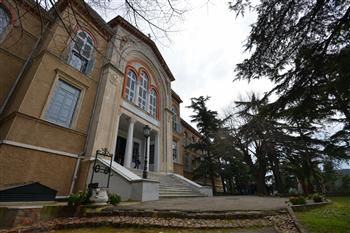
Over 900 students have graduated from Halki, with 12 of them ultimately becoming
the Istanbul Greek patriarch. Daily News Photo/Emrah Gürel
The Halki Greek Orthodox seminary on Istanbul’s Heyebeliada island will revert to its pre-1971 status as part of an indirect method of allowing the long-closed clerical school to reopen while avoiding constitutional regulations on private institutions, according to daily Radikal.

The seminary’s reopening, which has been an ongoing point of debate for years, may be achievable once its higher education status reverts to its previous state as part of a new democracy package, meaning the school will fall outside of constitutional limitations on private universities.

The Turkish Constitution at the time banned the opening of private universities, which also included Halki, due to its higher education status. Officials have objected to the decision, stating that the school was a high school where graduates will proceed to the priesthood and not continue to any other kind of university.

The reopening of the school has been postponed due to a lack of clarity over its status, as well as the principle of reciprocity with Greece, which has refused to allow Turkish minorities to elect their own religious officials. According to the terms of the Lausanne Treaty of 1923, Turkey and Greece are bound to treat their respective minorities with reciprocal rights, meaning that every implementation regarding the Greek population in Turkey and Turks in Western Thrace should be equal.

If the new package succeeds in altering the current private education institution regulation, the change may pave the way for the opening of Halki, according to Radikal.

Over 900 students have graduated from Halki, with 12 of them ultimately becoming the Istanbul Greek patriarch.


The new package, however, will not alter the much-debated Article 301, which calls for the punishment of insulting Turkishness or Turkish people, despite earlier reports. The election threshold will also remain untouched, daily Radikal reported.


Monday, August 26, 2013

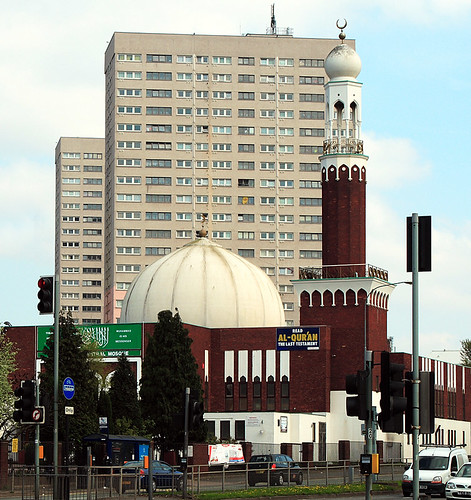
Why Muslims Are Necessarily Fundamentalists

Photo by George Daley
by Enza Ferreri — 8/20/2013

There is an incompatibility between Islam and the ideas which are fundamental to Western civilization.

There are logical contradictions between the principles at the basis of Islam and the West. One cannot resolve logical contradictions, they cannot be solved in the way that problems can. You simply cannot square a circle.

It’s got nothing to do with terrorists, or fundamentalists, fanatics, or Islamic radicals of various sorts.

I’m here talking about mainstream Islam and the fact that it is in serious, direct and open contradiction with principles which are at the core of Western civilization and form the very basis on which all our Western world is erected.

Saints Adrian and Natalia (Aug 26)

As we see a new age of martyrdom coming upon us, beginning with our brothers and sisters in the Islamic world, it is wise to fortify our souls with the lives of the martyrs of all ages. Saints Adrian and Natalia are especially revered as an example of married saints. The story of Adrian's martyrdom is similar in many respects to that of the Holy Neo-Martyrs under the Ottoman Muslim yoke. Whether through Roman pagans or Muslim pagans, the enemy strives to tempt and threaten Christians to deny the Lord Jesus Christ.

OCA — See also Pemptousia — 8/26/2013

The Martyrs Adrian and Natalia were married in their youth for one year prior to their martyrdom, and lived in Nicomedia during the time of the emperor Maximian (305-311). The emperor promised a reward to whomever would inform on Christians to bring them to trial. Then the denunciations began, and twenty-three Christians were captured in a cave near Nicomedia.

They were tortured, urged to worship idols, and then brought before the Praetor, in order to record their names and responses. Adrian, the head of the praetorium, watched as these people suffered with such courage for their faith. Seeing how firmly and fearlessly they confessed Christ, asked: “What rewards do you expect from your God for your suffering?” The martyrs replied: “Such rewards as we are not able to describe, nor can your mind comprehend.” St Adrian told the scribes, “Write my name down also, for I am a Christian and I die gladly for Christ God.”

The scribes reported this to the emperor, who summoned St Adrian and asked: “Really, have you gone mad, that you want to die? Come, cross out your name from the lists and offer sacrifice to the gods, asking their forgiveness.”

St Adrian answered: “I have not lost my mind, but rather have I found it.” Maximian then ordered Adrian to be thrown into prison. His wife, St Natalia, knowing that her husband was to suffer for Christ, rejoiced, since she herself was secretly a Christian.

She hastened to the prison and encouraged her husband saying: “You are blessed, my lord, because you have believed in Christ. You have obtained a great treasure. Do not regret anything earthly, neither beauty, nor youth (Adrian was then 28 years of age), nor riches. Everything worldly is dust and ashes. Only faith and good deeds are pleasing to God.”

On the pledge of the other martyrs, they released St Adrian from prison to tell his wife about the day of his execution. At first St Natalia thought that he had renounced Christ and thus had been set free, and she did not want to let him into the house. The saint persuaded his wife that he had not fled from martyrdom, but rather had come to give her the news of the day of his execution.

They tortured St Adrian cruelly. The emperor advised the saint to have pity on himself and call on the gods, but the martyr answered: “Let your gods say what blessings they promise me, and then I shall worship them, but if they cannot do this, then why should I worship them?” St Natalia did not cease to encourage her husband. She asked him also to pray to God for her, that they would not force her into marriage with a pagan after his death.

The executioner ordered the hands and the legs of the saints to be broken on the anvil. St Natalia, fearing that her husband would hesitate on seeing the sufferings of the other martyrs, asked the executioner to begin with him, and permit her to put his hands and legs on the anvil herself.


They wanted to burn the bodies of the saints, but a storm arose and the fire went out. Many of the executioners even were struck by lightning. St Natalia took the hand of her husband and kept it at home. Soon an army commander asked the emperor’s approval to wed St Natalia, who was both young and rich. But she hid herself away in Byzantium. St Adrian appeared to her in a dream and said that she would soon be at rest in the Lord. The martyr, worn out by her former sufferings, in fact soon fell asleep in the Lord.


Islamic Throwbacks Are Erasing Civilization

The problem is that these "throwbacks" think they are the future... And, God help us, they just may be.


By Giulio Meotti — Israel National News via AINA —  8/26/2013

Back to the days of the Mongols. Burn, pillage, destroy.

"Dozens of churches were burned and destroyed in the largest attack on Coptic houses of worship since 1321", reports the Wall Street Journal about the latest persecution of Christians in Egypt.

A symbol of Egypt's national culture, the ancient churches of Minya, did not hold religious services for the first time in 1,600 years. The churches had been destroyed by supporters of ousted President Mohammed Morsi.

The Coptic Pope Tawadros II, who appeared at the side of General Al Sisi during the announcement of Morsi's dismissal, is now hiding in a secret location for fear of terrorist attacks.

Christian shops and homes have been marked by a black "X", while the Muslim buildings are marked with a red "X". At the end of the clashes, the black painted buildings were destroyed, while the red ones were left unharmed. It was an operation of religious cleansing.

Last July, a Christian was beheaded by Islamists and there have been least seven deaths among Christians in the last few days.

The guru of the Muslim Brotherhood, Sheikh Yusuf al-Qaradawi, gave formal approval for the attacks against Christians. In a video, Qaradawi says that "Christians" have been "recruited (by the military junta) to kill innocent Muslims."

Videos from Egypt show burned churches and Islamists who embrace and kiss each other, congratulating one another for the destruction of the buildings of "infidels." In the city of Sohag, Islamists raised the black flag of al Qaeda on a church and executed a Christian couple after asking for their identity cards.

The Franciscan School of Beni Suef has been destroyed by Islamists and nuns have been forced to march in the streets as if they were "prisoners of war", while the cross in front of the building was torn down and replaced by the terrorists' flag.

Meanwhile, in the church of Mallawi, the statue of the mother of Jesus was literally decapitated.

Islamists are obliterating non-Muslim heritage in the Middle East. Their targets are Jewish shrines, Christian churches, monuments and cultural masterpieces.

On the Path of Saint Kosmas

There are numerous 'pearls' in this talk by Metropolitan Hierotheos of Napaktos, which we modern Orthodox would do well to apply in our daily lives...


MYSTAGOGY — 8/24/2013

The following speech was delivered at the presentation of the book by Maria Mamasoula titled The Paths of Saint Kosmas in Enslaved Romiosini in Agrinio.

By His Eminence Metropolitan Hierotheos of Nafpaktos and Agiou Vlasiou

[...]

The Path of Saint Kosmas

Saint Kosmas had the attributes of the Saints of our Church. He was a prophet, an apostle, a venerable one and a martyr.

He was a prophet and thus accepted by the people, which is why they would welcome him by chanting the apolytikion of the Prophet Elijah. He had an apostolic conscienciousness which is revealed in the beginning of his homilies, where he refers to the work of the Apostles. He was a venerable ascetic who lived an ascetic and evangelical life. Lastly he was made worthy of a martyric death and he ended and perfected as a martyr of Jesus Christ.

Throughout his life he gave witness to the Orthodox faith and suffered martyrdom to the glory of God.

Alternate Paths to the Saint

Every path has its alternate path. This is true also with Saint Kosmas. He himself walked along the prophetic, apostolic, venerable and martyric path, but people view him from other smaller paths, alternate paths.

One such alternate path is the misinterpretation of the life and work of Saint Kosmas, which is an alternative path of the enlightenment. Some interpret his work as if he was a part of the enlightenment.

Sunday, August 25, 2013

Forgiveness and Jihad: Breaking the Chain of Evil, Part 4


See Parts One and Two and Three . . .

I plan to attempt some observations in Part 5 to try to apply the Church's teaching on forgiveness to our situation vis a vis Islam and Muslims.


Today's quote:
The great example for Christians would be their Christ-like martyrs who have not allowed themselves to be touched by that evil, what Evagrios calls “allowing the devil to rejoice two times.” You are sinned against; the devil rejoices. You react with vengeance or without forgiveness, and the devil rejoices two times. Never give the second joy.

You spoke of the division in us between the Christ-self and the legion of other selves — two natures at war within us. Is it that one nature has ultimately to be transformed? You also spoke about a person who is free and yet has no choice — this is a totally transformed being, isn’t it?

We would say there’s a human nature that when it is truly itself is full of the grace of God and in communion with God and is, therefore, deified and becomes one with the divine nature. On the other hand, there is the human nature that is broken, fragmented, estranged from its real foundation and in need of salvation. The transforming power of grace is there. But in a sense, it takes all of time to be deified. There are no miracles on this level. The degree of suffering that has to take place is very great.

It’s an incarnated struggle on this level.

Yes, and I believe it can’t be done alone. You need a community.

Our culture places great emphasis on improving oneself. There is a difference between that and being made whole, being brought to your true nature.

The saints speak about spiritual hedonism, where you want peace and joy but you don’t want reality. That’s why Saint Paul says that you can give your body to be burned but if you have not love, you are nothing.

Observations on the Egypt crisis by Abba Seraphim of the British Orthodox Church

This is a must read article, for its summary of recent events in Egypt, the historical context it provides, and its expression of the Coptic Orthodox Church's faith in the Lord of Hosts.


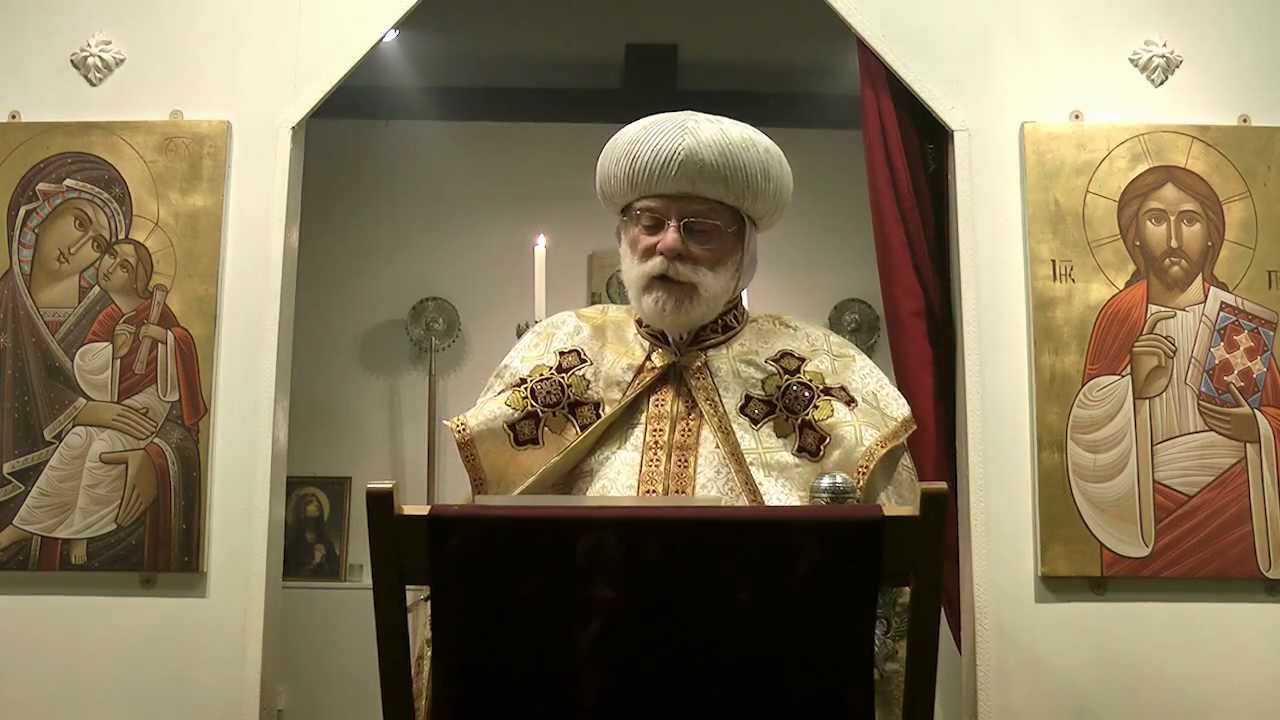
by Metropolitan Abba Seraphim, Primate of the British Orthodox Church, Coptic Orthodox Patriarchate

British Orthodox Church via OCP Media — 8/24/2013

Events in Egypt over the past few days have both shocked and saddened, and as reports of continuing incidents and civil disturbance increase we pray fervently that peace and security may return to that land.

Revolutions are destabilising events and come in many shapes and sizes. The Egyptian revolution of 1952 was a military coup by the Free Officer Movement, which established the military regime which was to hold power for the next 59 years. It lacked democratic legitimacy and was both corrupt and venal. The 2011 Revolution, however, was a popular uprising more in keeping with the spirit of the 1919 Egyptian revolution in its embracing all sections of Egyptian society in a patriotic movement to restore freedom and justice. It is worth noting that initially the Muslim Brotherhood declined to support this uprising, but once it saw the rapid success of this momentum for change, it offered its support.

Democratic legitimacy

Much has been made of the overthrow of Egypt’s first democratically elected president, Mohamed Morsi, but it is important to recognise that democracy is more than periodic recourse to the ballot box. Having achieved a narrow victory over his main rival on a turnout of just over half of the electorate, the new president might have endeavoured to use his position as a means of unifying and reconciling a fractured society. In his inauguration oath he swore to “respect the constitution and law, to take care of the people’s interests, a complete care.” Later, in an emotional speech in Tahrir Square he announced, “I came to you as I believe that you are the source of authority and legitimacy which is above all. There is no place for someone, an institution or for an authority to be above this. The people are the source of all authority, judge and decide, convene and insulate … There is no authority that is above this.”

Although he resigned as Chairman of the Freedom and Justice Party as he had promised during his election campaign, which gave him the opportunity to serve as president of all Egyptians, his concerns and sympathies proved to be narrow and sectarian. Sadly, it soon became clear that the electorate had actually installed the Muslim Brotherhood in office and that the real power lay with its Supreme Guide, Mohamed Badie, whilst Mohamed Morsi was merely the holder of the presidential portfolio.

During the first year of his presidency the democratic aspirations of the revolution were steadily undermined, culminating in his assumption of unlimited legislative powers without judicial oversight or review of his acts. After the Supreme Constitutional Court’s dismissal of the People’s Assembly for electoral irregularities, only the consultative Shura Council remained of a bi-cameral legislature, yet new legislation was still enacted, including the propagation of a new Egyptian Constitution. Having repeatedly clashed with the judiciary, attempts were made to intimidate the judges and to remove many of them through enforced retirement.

It was as a result of the steadily-growing domination of the Muslim Brotherhood in all areas of the state and society and the encouragement of their narrow vision and divisive social policies, that the popular uprising against Morsi ensued. It expressed the fears of the great majority of Egyptians that their aspirations for a free and just society, inclusive of all, was in danger of being lost for ever. It should be recalled that the National Socialist German Workers’ (Nazi) Party rose to power through democratic election, after which they consolidated their grasp on the state and cynically discarded the democratic process.

The role of the church

Since the Egyptian revolution of 2011 the religious leaders in Egypt, both Christian and Muslim, have consistently called for justice and reconciliation and both the Grand Sheikh of Al Azhar (Mohamed Ahmed El-Tayeb) and the Coptic Orthodox Church (under the late Pope Shenouda III; Metropolitan Bakhomios as locum tenens and Pope Tawadros II) have worked together to encourage national unity. Following the removal of President Morsi, Pope Tawadros appeared alongside the Sheikh of El-Azhar at the inauguration of the new interim president. Having eschewed political involvement since the beginning of his papacy, he made it clear that he was there to support “honourable people whose sole aim is the interest of Egypt and Egyptians, excluding no one, marginalising no one and excepting no one.”

Western governments

Western governments have been quick to condemn the violence and loss of life and have called for dialogue. William Hague condemned “the use of force in clearing protests” and called on the security forces “to act with restraint.” As supporters of the Muslim Brotherhood are also armed and have been responsible for murdering soldiers in Sinai and armed attacks on police stations, restraint is required from all sides. Invitations to dialogue by Al-Azhar have been completely rebuffed by the Brotherhood, as have invitations by the interim President to reconciliation meetings.

Western media bias

It is disconcerting to note the clear bias of much of the Western media in favour of the Muslim Brotherhood. The use of emotive words, such as ‘coup’, ‘massacre’ and ‘legitimacy’, with the failure to report widespread violent attacks on churches, police stations, government offices and neutral cultural institutions, such as the Bibliotheca Alexandrina, lacks the impartiality one might expect from independence sources, such as CNN and the BBC; as does identifying all snipers as belonging to the army, when live news broadcasts clearly showed armed rebels firing guns. 

Despite its denial of bias, the Qatar-backed channel Al Jazeera depicts the Muslim Brotherhood in a sympathetic light and, according to one of the 22 staff  who recently resigned in protest, “the management in Doha provokes sedition among the Egyptian people and has an agenda against Egypt and other Arab countries.” 

The Irish media, the Irish Times and the Sun in particular, recently relayed reports from the children of Hussein Halawa, the Imam at Dublin’s largest and most controversial mosque in Clonskeagh, who just happened to be inside the Al-Fateh mosque when it was cleared by the security forces. Headlines such as “Irish family held in Egypt jail hell. Holiday nightmare as relatives fear they’re tortured” hardly suggest impartiality.

Attacks on Christians go largely unreported

During President Morsi’s term of office, attacks on Christians became more frequent. Since his removal they have increased alarmingly with over fifty churches attacked, damaged or destroyed in the three days following the Brotherhood’s call for a “Day of Rage.” Vicious denunciations of Christians – now opprobriously labelled “crusaders” – and unrestrained assaults on their property and churches show the true nature of those who support the Muslim Brotherhood. 

There have been instances of soldiers and Christians lynched by the mob, who then proceeded to desecrate their corpses in the most disgusting manner, in much the same way as Private Lee Rigby was treated by his murderers on the streets of Woolwich.  

In many instances local Muslim communities have joined Christians in protecting their places of worship, clearly demonstrating that this is not a battle between Christians and Muslims but is a struggle against terrorism and fanaticism. 

In a recent interview with His Grace Bishop Angaelos on Al-Jazeera, after it was noted that “some Christians have blamed Brotherhood supporter for the attacks”, he was asked if he had any evidence about “who is attacking your churches”. His observations that these attacks, which appeared to be orchestrated and synchronised, and coming on the tail of “certain events”, with the rhetoric, incitement and reported attacks on individual Christians, suggested “some sort of connection”, showed more balance and perception than his interviewer.

In an official statement, the Coptic Church said that whilst it holds in deep appreciation the honourable, friendly States who understood “the nature of the events in Egypt”; it strongly denounced the falsities and errors propagated in the western media. “We invite the media to objectively read the realities on the ground, and to refrain from offering an international or political shield to the bloodthirsty, terrorist groups and all who belong to them. These groups are attempting to spread ruin in our land. We call upon the local and international media to offer the real image of what happens in Egypt faithfully and truthfully.”

The statement went on to say that it strongly stood by the Egyptian police, armed forces, and all the institutions of the Egyptian people in the face of the armed violence and black terrorism from inside and outside Egypt. It denounced the “assaults against the State and the peaceful churches, and the terrorisation of Egyptians—Muslims and Copts—that goes against all religious, ethical and human values. We absolutely reject any attempts to drag Egypt into sectarian strife.”


“If the hands of evil come to Egypt to kill, burn, and ruin; the hand of the Lord is there to guard, strengthen, and rebuild. We put our faith in Divine support, and are confident that it will help Egypt along this critical period, and take her to a better tomorrow and to the bright future of peace, justice, and democracy which this noble Nile people deserve.”