Less than two weeks before he was killed by a Muslim extremist group, Father Daniil Sysoev and his co-laborer, Professor (and now Deacon) Yuri Maximov, traveled to Serbia, where they conducted two joint interviews. These incredible, in-depth discussions serve as something of a last testament to the martyric witness of Righteous Father Daniil, and should be required reading for Orthodox Christians everywhere.
I chose a brief quote from Fr. Dcn. Yuri's words about Fr Daniil to include in my book. There is every reason to hope that these two interviews will be officially published here in America in the not too distant future, and we must pray that Father Daniil's books (referenced in the text below) will eventually be translated from Russian and made available to the English-speaking world.
As an aside, those familiar with Father Seraphim Rose's writings will notice explicit reference by Father Daniil Sysoev to the Orthodox teaching of the aerial toll houses during this wide-ranging interview. Traditional Orthodox believers readily sense the realness and closeness of the other world, and accept the traditional teaching of the Church regarding The Soul After Death.
Fr. Dcn. Yuri Maximov's inspiring recollections of Father Daniil Sysoev in the introduction will likely serve as the seed for future hagiographical works on this great confessor and martyr for Jesus Christ.
May we be inspired and instructed by Righteous New Priest-Martyr Daniil's fearless zeal and faith, and may we have his blessing!
Serbian Conversations, Part 1
An Interview with Fr. Daniil Sysoev and Dcn Yuri Maximov
Source:
Incendiary, 3/1/2010
“Shining as a star”
A few words about Father Daniel Sysoyev from Yuri Maximov
 |
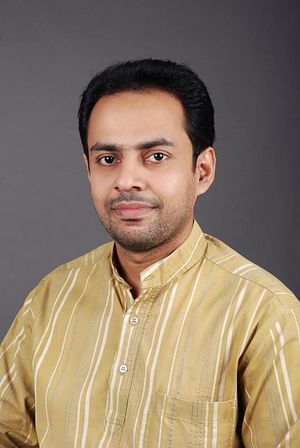
| Fr. Daniil Sysiev |
Late on the night of November 19, 2009, Fr. Daniel Sysoyev was killed in the Church of the Apostle Thomas on Kantemirovskaya in Moscow. An unidentified person in a mask entered the church and shot him point-blank.
I knew Fr. Daniel for ten years-since October 1999, when we met each other at a conference where we both spoke. He called me the night before, and on the day of the conference I saw a man walking in front of me in a riassa and immediately understood that it was the very same Deacon Daniel Sysoyev with whom I had spoken on the phone.
There was something similar in his voice as well as walk which expressed his uniqueness and allowed one to unmistakably recognize him in a crowd, even from behind and even to an unfamiliar person.
In one of his interviews shortly before his death, Fr. Daniel said that “we need to walk before God as He said of Enoch, ‘he walked before God and God took him.’ That walking before God is the root of missions.”
To shortly describe Fr. Daniel, he walked before God. And although that, in the first place, is the state of a soul completely directed to God, it even found its expression literally in his walk, not even mentioning his actions and words.
He walked with a light step, like a person who knows where he is going and why, one who is calm in the present and that does not worry about the future because he has entrusted all his cares to the Lord, Who is as close to him as a Loving Father.
During the ten years that I knew him, many times Fr. Daniel said that he wanted to die as a martyr. I am afraid that now those words will sound completely different than when he said them. When he talked about martyrdom there was neither gloomy solemnity nor unhealthy ecstasy. He would say it simply and with joy, and I, hearing this, would feel the same awkwardness and perplexity that I felt when I read in the epistles of St. Ignatius the Godbearer of his fervent desire to suffer for Christ. One and the same spirit was in the one and the other, and I understood neither of them.
I recall how a few years ago when we were in Macedonia I brought Fr. Daniel to the amphitheater in the ancient city of Bitol. Here, during the time of the Roman Empire, they fed people to wild animals for the delight of the crowds of pagans. On the sides, there remained two small rooms, in which the animals were kept before being let into the arena, and, in the center, there was a box the size of a man, from which the condemned would come out to his torment. It is certainly true that several martyrs of the early Church accepted death for Christ in such a way in that amphitheater. I said to Fr. Daniel, “Look, Father, you can stand there where the martyrs stood before going to their podvig.” And he went into that dark box. I remember how he stood there and gazed into sky.
Probably with the same concentrated peacefulness he was looking at his own murderer. I confess that I have thought about whether or not batushka was afraid at the final moment because I would be afraid. Therefore, I asked the one eyewitness that saw the murder with his own eyes what Fr. Daniel was doing when, leaving the altar, he saw a man in a mask with a pistol in his hand. I was told,
“He was walking towards him. Right towards him.”