OCP Media — 8/24/2013

Clad in ceremonial attire complete with a jeweled crown and the patriarchal crozier in one hand, Ecumenical Patriarch Bartholomew stood, Aug. 15, on the terrace of the Sumela Monastery and prayed. His face was damp with sweat and his silk white robe with powder-blue patterns of the cross shimmered under the noon sun.
I was not there, but as I watched Greece’s TV 4E livestreaming the Divine Liturgy from Turkey’s northern province of Trabzon, I could feel the heat of the moment. While the Biblical verses the patriarch recited in classical Greek sounded ethereal, the symbolism of the service, which was also attended by grim-faced government representatives in grey suits, could not have been more mundane.
Keen on verbally demoting Bartholomew’s mandate to that of a neighborhood priest’s, Turkish officials still refer to him as “the Fener Greek Patriarch,” but the ecumenical leader of the 300 million-member Orthodox Christian Church has indeed come a long way in his very mundane struggle for recognition in Turkey.
This was the fourth time in a row, after a government-imposed ban for 86 years, that a religious service was held at the Sumela Monastery to mark the Dormition of Theotokos, one of the great feasts of the Orthodox Church. A strong advocate of religious freedom, Bartholomew had a key role in persuading the Justice and Development Party (AKP) government to lift the ban in 2009.
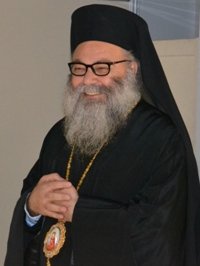
He was installed as patriarch in 1991 and has been speaking out ever since for the rights of not only the very-much diminished community of less than 3,000 ethnic Greeks but all religious minorities in Turkey. Today, a 73-year old man with a cotton-white beard covering his chest and a voice that has mellowed with age, he still makes the same demands with eloquence.
Speaking at an iftar dinner recently, Bartholomew looked his host — Istanbul’s top Muslim clergyman Mufti Rahmi Yaran — in the eye and said, “Religious officials should be properly educated and set examples based on their trainings. Now that we are entering a dangerous stage of lacking qualified religious officials, we would like to emphasize the gravity of the situation at the Halki Seminary.”